The Five Types of Luxury Brands, And Why the Better Ones Never Fit Into Just One
This is Part 3 of The Luxury Spectrum™ series.
Two things have been established in this series. Luxury is not a singular concept. And the luxury consumer is not one person.
In the first two parts we mapped three distinct consumer types — Access, Ownership, and Logos — each with a different relationship with luxury and a different reason to buy.
Now we turn to the brand side.
Most brands have spent years confusing price with positioning. Price is what you charge. Positioning is what the market has already decided about you. One is a number. The other is a verdict.
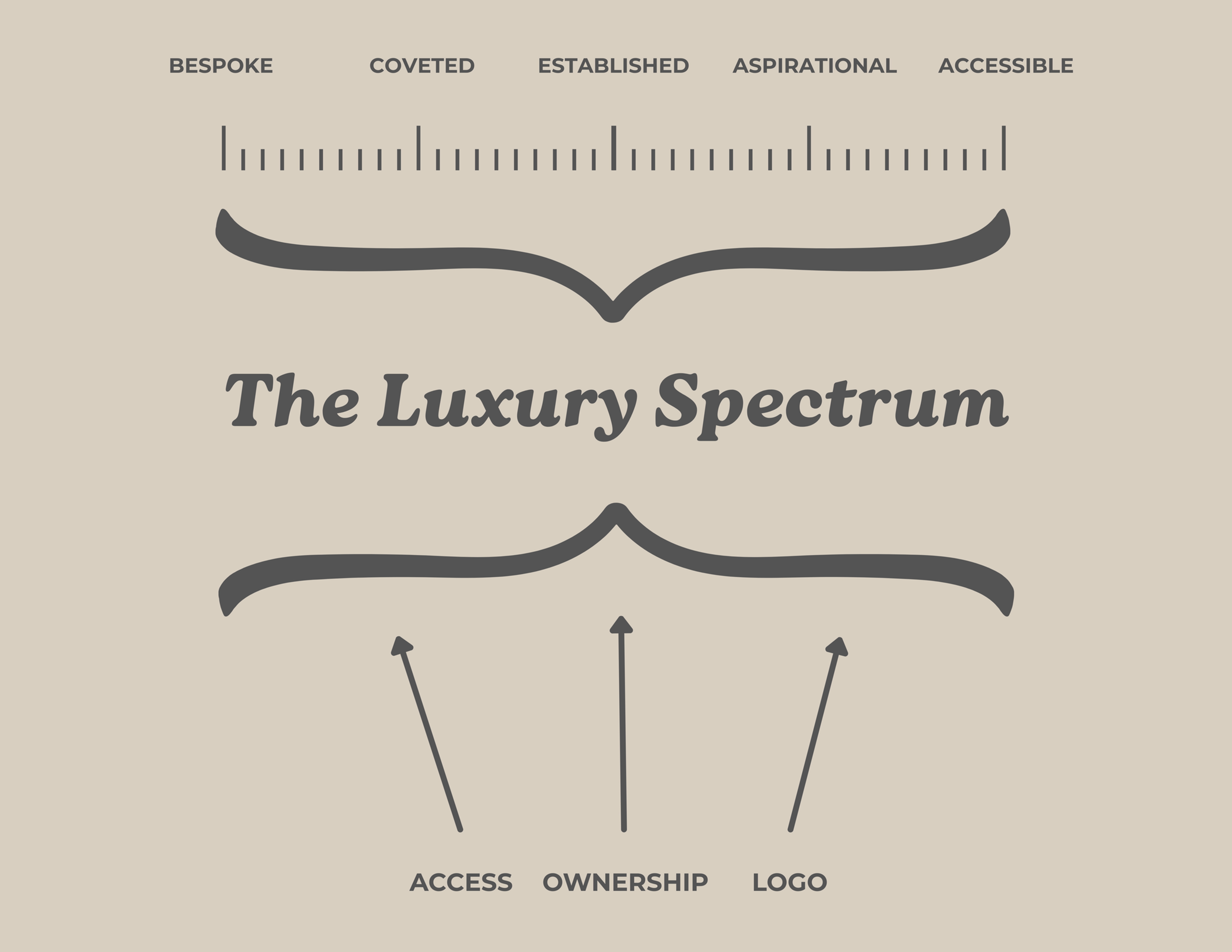
The Luxury Spectrum™ maps brands across five levels of positioning.
What positions you is your storytelling, your distribution, your pricing philosophy, your behaviour, and your consumer. You get to choose whether those placements are intentional or accidental. And when your brand doesn't make that choice consciously, the market makes it for you.
The Five Levels
The Luxury Spectrum™ maps brands across five levels of positioning. Not price. Positioning. Price is merely a byproduct of where you sit on The Luxury Spectrum™, never the lead.
Level 1 — Bespoke
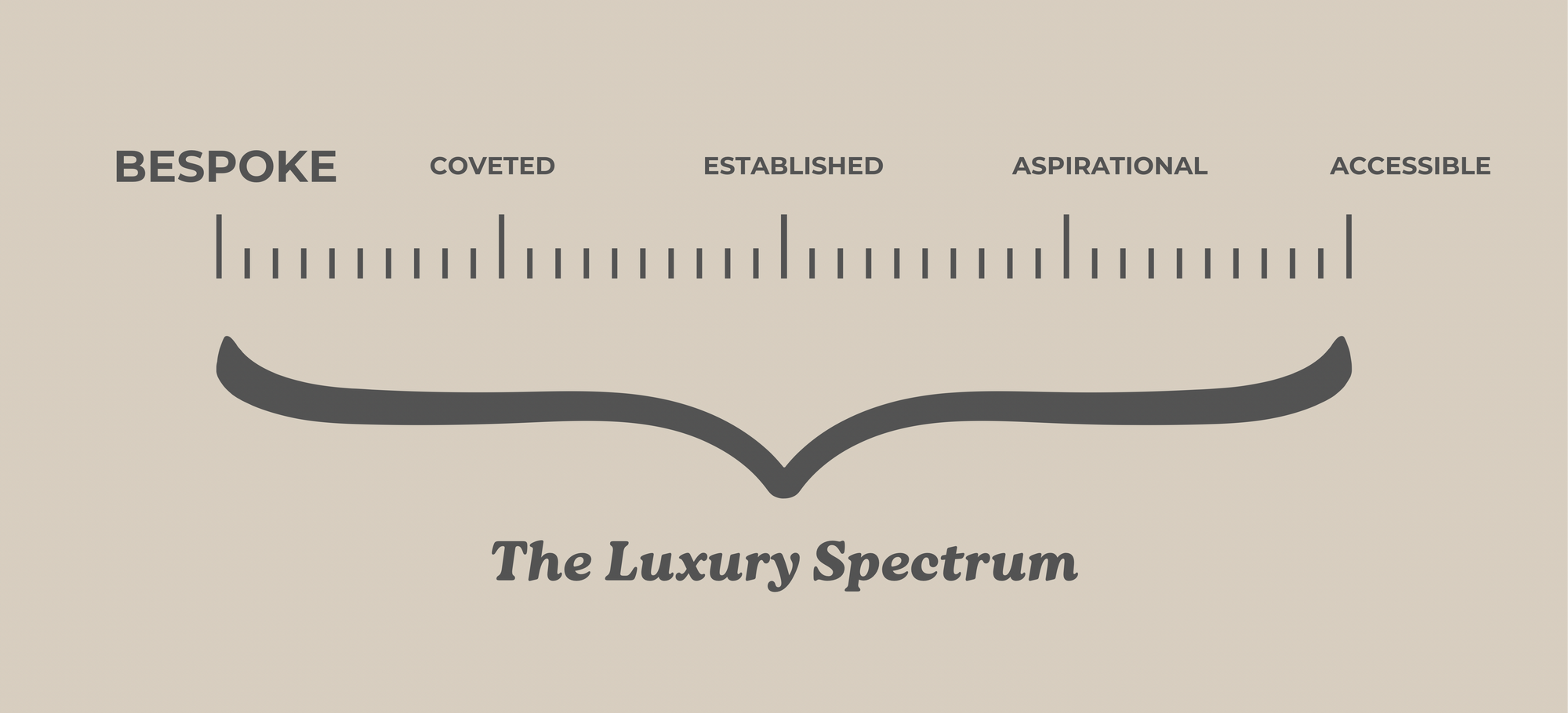
At this level there is only a relationship. Everything made here exists for one person, one purpose, one moment. The Bespoke brand selects its consumer as carefully as its materials. Access is earned through years of loyalty and craft is never rushed.
The final object — whether a gown, a timepiece, or a jewel — carries the full weight of that intention.
Hermès of Paris reserves their Special Order (SO) programme for only their most loyal clients with significant purchase history. HSS stamped handbags in combinations that exist nowhere else on earth.
Rolls-Royce of England treats every car as a different answer to the same question of who you are. Virtually every car that leaves its premises is unique. Every element tailored, every finish decided and every detail singular around the taste of one user.
Graff of London offers highly personalized bespoke services, allowing clients to co-create one-of-a-kind High Jewelry. The process, right from selecting rare diamonds to shaping bespoke mounts and personalizing engravings, is tailored to the individual, bringing their unique story to life. Each piece conceived for a specific story and a specific life.
Bespoke brands earn the right to be chosen through decades of uncompromising craft. What they make for you cannot be made for anyone else. That irreplaceability is the entire foundation.
Level 2 — Coveted
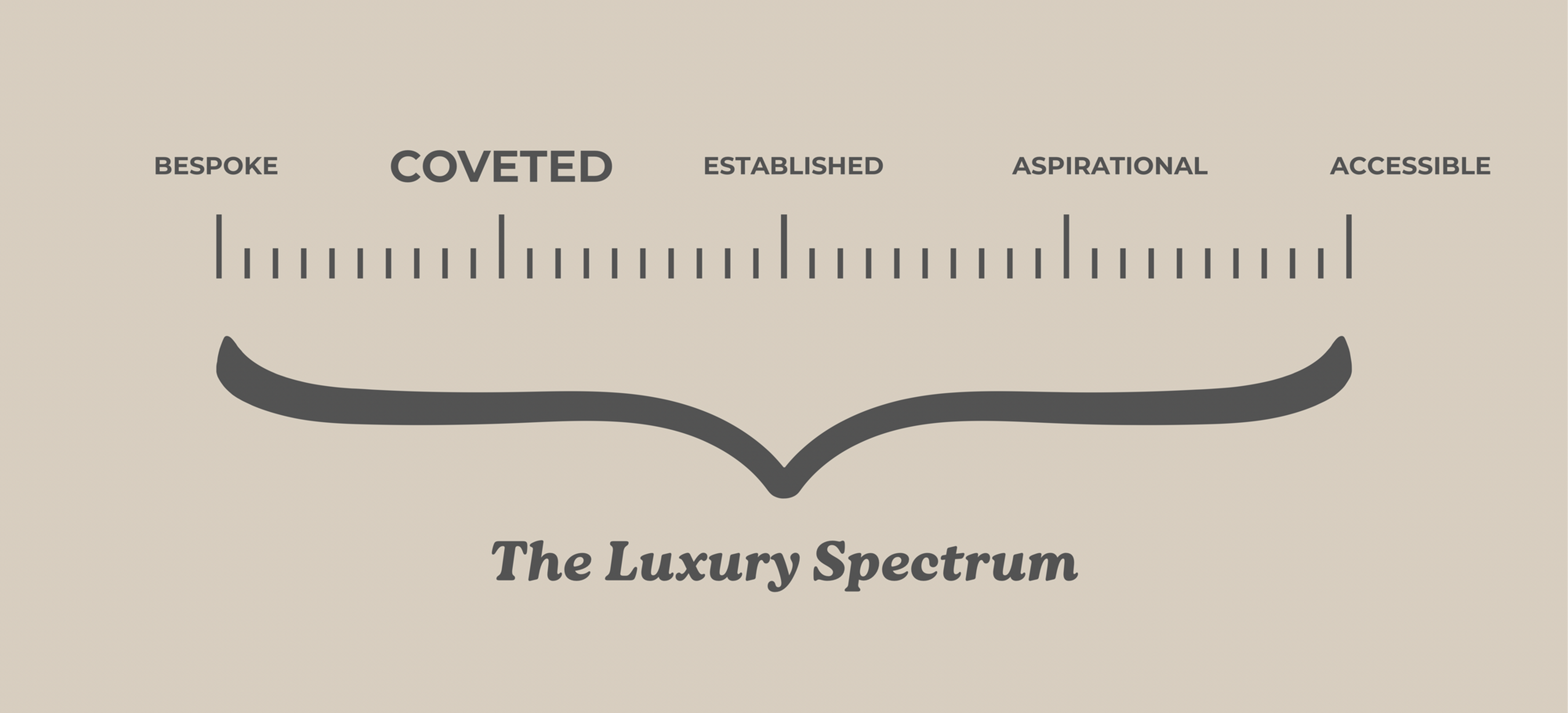
The Coveted brand produces for a small, specific audience and has no intention of growing beyond what its craft can honestly support.
Waiting lists here are a philosophy, not a logistics problem. Scarcity is engineered with complete deliberateness. The consumer waits not because supply is short but because the brand has decided that desire must be sustained long before ownership is permitted.
Hermès Birkin and Kelly remain the most documented waiting list in luxury history; produced deliberately below demand, forever.
Patek Philippe's Grand Complications take years to complete by hand and are passed down through generations rather than traded. There isn't even a waiting list for these — they are only offered to top-tier, established VIP clients of the house.
Van Cleef & Arpels Mystery Set (Serti Mystérieux) pieces take months to construct. The technique so intricate that no visible settings remain, only an unbroken surface of stone. Acquiring a new Mystery Set creation functions more like an invitation-only queue for VIP clients, which can stretch for years together.
This is a level of craft that cannot be scaled, and has never been replicated. The Coveted brand measures its success not by how many people own it but by how many people never will.
Level 3 — Established
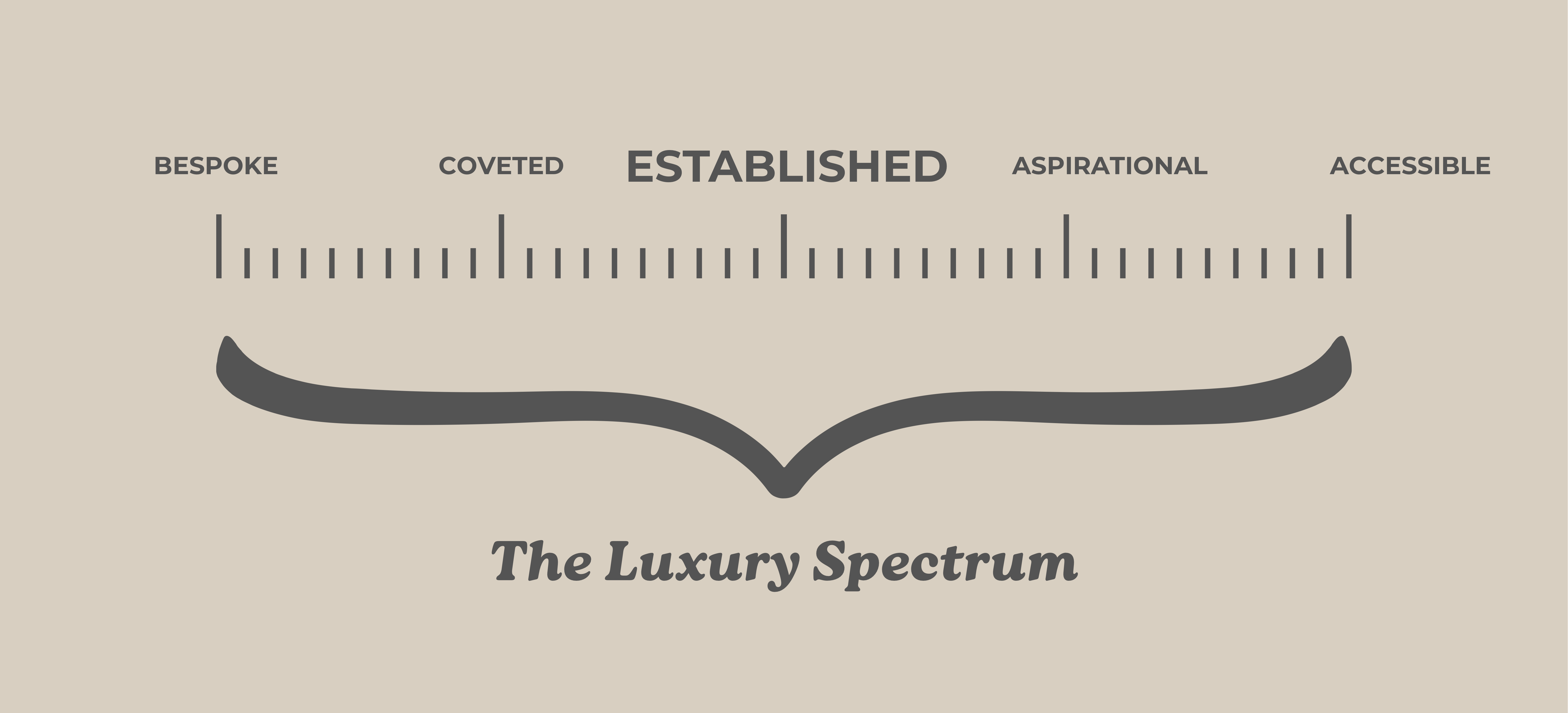
The Established brand has achieved what most brands spend decades chasing — genuine cultural authority.
This brand is recognised across generations. Rooted in heritage so deep it functions as a foundation, not a crutch. A point of view so consistent that even a creative director change cannot shake the essential identity of the house.
And here is where The Luxury Spectrum™ becomes most instructive.
Very few brands sit cleanly at one level.
Take Louis Vuitton. A Bespoke trunk made for one person's lifetime of travel and a monogram keychain sitting at Accessible both carry the same house code. What holds them together across those levels is a positioning philosophy so unwavering that every product, regardless of price, feels unmistakably like Louis Vuitton.
The moment that philosophy erodes, the brand slips. Quietly at first. And then with a bang. Think, Coach circa 2012.
This is what it looks like when brands position themselves with intention:
Louis Vuitton of Paris is the most valuable luxury brand in the world at $40.7 billion in 2025, built on a heritage of travel and craft that has remained coherent across 170 years.
Chanel of Paris has the highest emotional attachment score among all luxury fashion houses in 2026, earned through narrative coherence across decades, not campaign frequency.
Manish Malhotra of India with almost thirty years of dressing Bollywood royalty with a brand language so consistent yet so eloquent that his name has become synonymous with Indian occasion wear at its finest.
The Established brand earns its authority slowly. And guards it with everything.
Level 4 — Aspirational
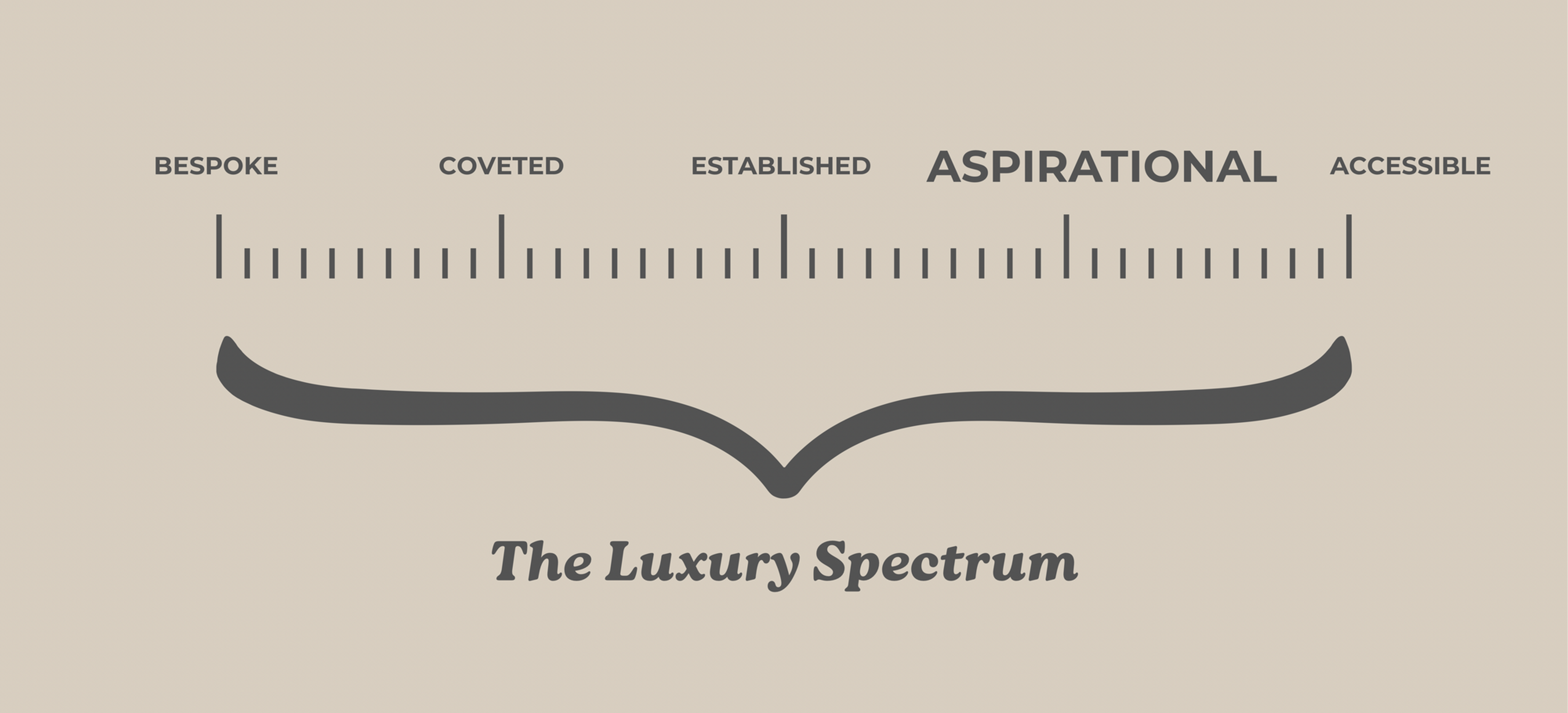
The Aspirational brand sits within reach for a broad consumer base while still feeling like a genuine achievement to own.
This is the most commercially active level of The Luxury Spectrum™.
It is also the most dangerous position to hold. Aspirational verticals exist in permanent tension. Pull too far toward accessibility and you exit the luxury conversation entirely. Push too hard toward exclusivity and you price out your core consumer.
The brands that navigate this well maintain an ironclad brand world, even as the product range democratises. The ones that lose their way discount, over-distribute, and say yes to every opportunity until they no longer recognise what they started as.
Tiffany of New York — the blue box is one of the most recognised objects in the world. Their entry jewellery brings that recognition within reach of the Ownership consumer without disturbing the prestige of what sits above it.
Papa Don't Preach of India. A celebrity endorsed maximalist momentum, that is globally recognised, at a well-executed price point that feels earned rather than merely spent.
Burberry of London, specifically the trench coat, a garment so deeply embedded in cultural memory that it holds its Aspirational positioning even as the rest of the house recovers from years of strategic drift.
The Aspirational brand earns its position through the art of being just out of reach; close enough to want, far enough to mean something.
Level 5 — Accessible
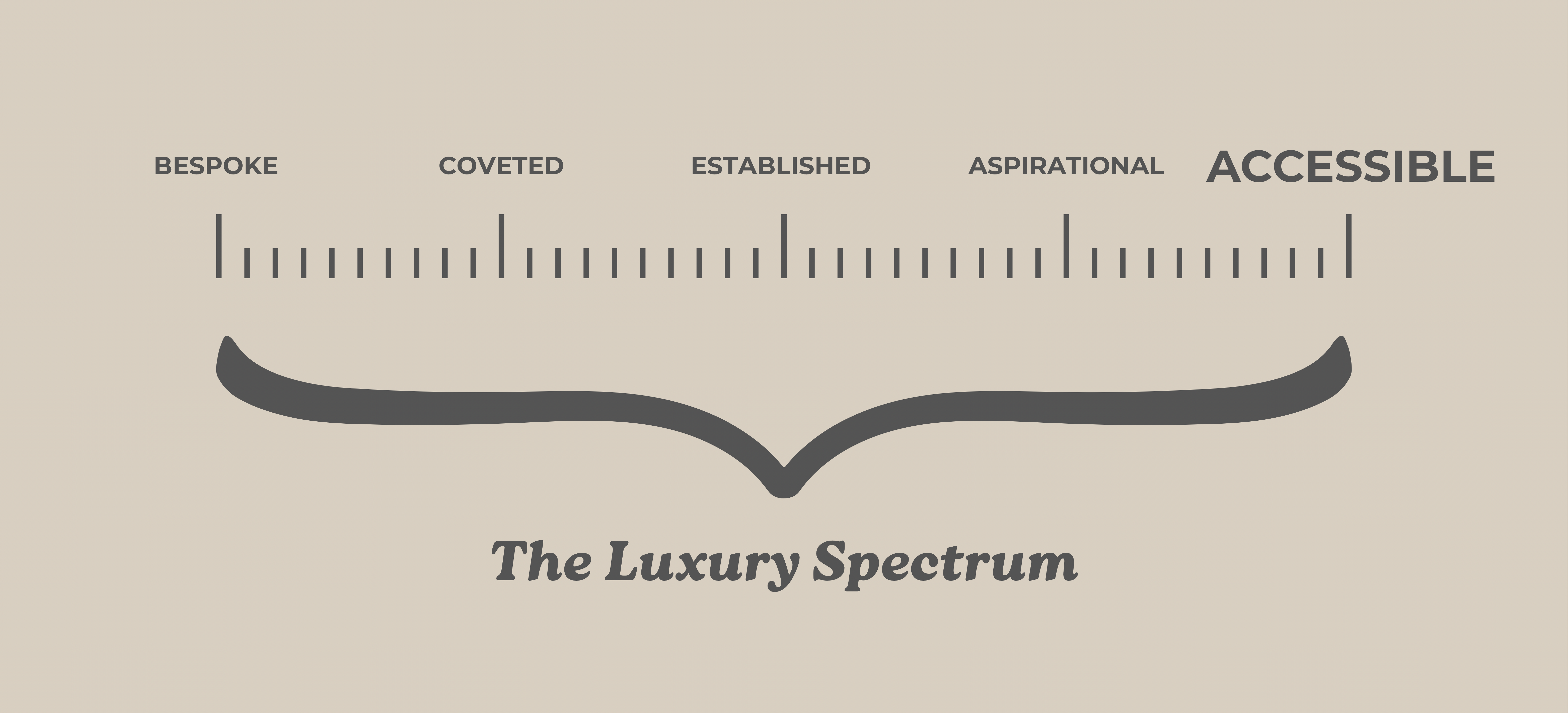
Accessible Luxury is, quite simply put, elevated basics.
The best possible version of an ordinary thing, made with extraordinary care, priced to reflect the craft and nothing else.
Mark Zuckerberg wears the same grey t-shirt every day.
It looks like it costs ten dollars. In reality, it costs between $300 and $400, made by Brunello Cucinelli of Italy, the house known as the King of Cashmere.
That shirt is not expensive because of a logo.
It is expensive because of what it is.
This is the distinction that defines the consumer who shops at this level.
A middle class income can afford to spend $300. But a middle class consumer will never spend it all on one shirt because the value proposition is incomputable. For them, a shirt is a shirt.
The Accessible Luxury consumer sees it differently.
The things used most deserve the most consideration. The shirt worn every day, the glass drunk from every morning, or the sheet slept in every night.
These are the connoisseurs of quality. The discerning, most certain consumers in the entire luxury market. They have moved beyond logos, beyond aspiration, beyond ownership as performance. They buy purely for the quality of the thing itself.
Of all five levels, Accessible is the only one named for the brand's relationship with availability, not with the consumer's desire, authority or arrival.
Every other level is defined by what the brand makes the consumer feel.
This one is defined by a decision. The deliberate choice to make considered craft available to more people without compromising what makes it worth having. That is not a concession, but a philosophy worth studying.
Brunello Cucinelli of Italy. The grey t-shirt, the cashmere basic, the best possible version of the most ordinary garment.
Good Earth of India has considered homeware and textiles, elevated Indian craft that reflects the making without requiring sacrifice to acquire.
The Row of New York is yet another masterclass in elevated simples. The white shirt, the wide leg trouser, worn by people who prefer monotonous quality.
The Accessible Luxury brand earns its position through the simplicity of making something that is ordinary to the common eye into something extraordinary to the discerning one.
The Most Important Insight
The title of this piece names five types of luxury brands. But that is a deliberate simplification. No brand in existence sits entirely within one level.
What sits within a level is a decision which can be a product, a service, a vertical, or a moment.
The most instructive way to read The Luxury Spectrum™ is as a diagnostic.
Where a brand's verticals cluster tells you everything about its philosophy. Where they scatter tells you everything about its vulnerabilities. The houses that endure are the ones whose every decision — from the price of a keychain to the construction of a bespoke trunk — reinforces the same unwavering point of view. The ones that fade let their verticals drift without ever noticing the distance between where they started and where they ended up.
The Luxury Spectrum™ is a mirror. What it reflects is always the truth.
— Fin —
The Blog.
Recent Posts.
The Fifty-Year Question. What the Gucci x L’Oréal Deal Really Says About Brand Control.
Three Shirts. One Acquisition. The Chanel x Charvet Deal Decoded.
Why Richemont Grew 20% While Everyone Else Collapsed.
In the World of Luxury, Discounting Is a Disservice.
The Great Luxury Collapse of 2026, and Who Survived it Unfettered
The Fifty-Year Question. What the Gucci x L’Oréal Deal Really Says About Brand Control.
Three Shirts. One Acquisition. The Chanel x Charvet Deal Decoded.
Why Richemont Grew 20% While Everyone Else Collapsed.
In the World of Luxury, Discounting Is a Disservice.